
Driveways That Handle Rural Traffic Loads
Gravel Driveways in Taylorsville for residential, farm, and rural properties needing proper drainage and durable surfaces
Driveways that hold up under pickup trucks, tractors, and delivery vehicles start with correct base preparation and drainage design. Full Time Grading & Excavating installs and resurfaces gravel driveways across Taylorsville, grading each project so water sheds to the sides rather than pooling in ruts. Poor drainage causes the gravel to shift and creates muddy sections that worsen with every rain.
New installations involve excavating to stable subgrade, building a compacted base layer, crowning the surface for drainage, and applying gravel sized appropriately for your traffic patterns. Resurfacing adds new material after regrading the existing surface to correct low spots and restore proper slope. Maintenance includes blade work that redistributes gravel and fills ruts before they deepen into permanent damage.
Request a property assessment to determine whether your driveway needs resurfacing, regrading, or complete replacement..
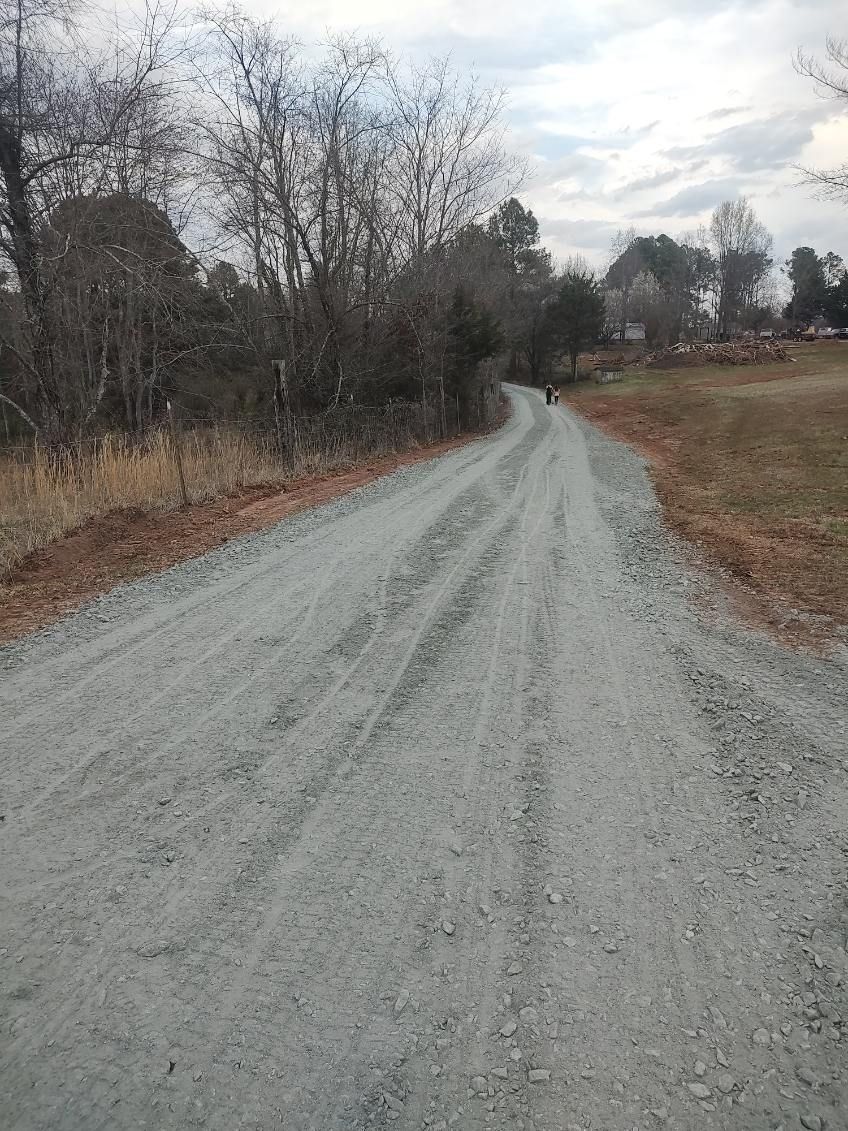
How Grading Addresses Drainage Problems
Gravel driveways fail when water sits on the surface instead of running off, washing material downhill, or when traffic pushes loose stone into berms along the edges. Proper grading creates a crowned profile with the center higher than the edges, allowing water to sheet off to ditches or vegetation rather than channeling down the middle. The base must be compacted firm enough that heavy loads don't create depressions where gravel sinks and water collects.
Once grading and resurfacing are complete, you'll drive on a firm surface that doesn't develop axle-deep ruts after storms, notice water running off to the sides within minutes of rainfall rather than standing in tracks, and see gravel that stays distributed evenly instead of piling along edges or washing into ditches. The driveway remains passable during wet weather without creating mud streaks onto paved roads.
Longevity depends on gravel depth, base firmness, and maintaining the crowned shape through periodic blade passes. Affordable maintenance extends driveway life significantly compared to allowing ruts to worsen until full reconstruction becomes necessary.
Common Questions About Gravel Driveway Work
Owners of rural and residential properties throughout Alexander County, Catawba County, and Caldwell County typically want to know what makes driveways hold up and when resurfacing is enough versus needing complete replacement.
What causes gravel driveways to develop ruts and soft spots?
Water sitting on the surface softens the base, and traffic then pushes gravel aside and compacts the subgrade unevenly. Without proper crown or side drainage, the problem worsens with each storm until the driveway becomes impassable in wet conditions.
How does resurfacing differ from new installation?
Resurfacing reworks the existing surface by blading out ruts, restoring crown, and adding fresh gravel. New installation excavates deeper to create a compacted base layer, which is necessary when the subgrade has failed or drainage patterns need major correction.
When is maintenance needed to prevent major repairs?
Blade grading once or twice annually redistributes gravel before ruts become deep. In Taylorsville's climate, addressing drainage issues before winter prevents freeze-thaw cycles from turning small depressions into large washouts.
What gravel size works best for different uses?
Larger crushed stone resists rutting under heavy farm equipment but feels rougher for daily car traffic. Blended sizes compact tighter for residential driveways while still allowing water to percolate rather than running off too fast and eroding the surface.
How does proper installation save money over time?
Firm base and correct drainage prevent the repeated resurfacing cycles that happen when driveways are built without adequate foundation. You maintain the surface rather than rebuilding it every few years.
Full Time Grading & Excavating evaluates whether your driveway needs maintenance grading, additional material, or base reconstruction based on current condition and
drainage performance. Contact us at (828) 404-7123 to request a free estimate.