
Properties Cleared of Hazards and Ready
Stump Removal in Taylorsville for safer landscapes and future site development
Stumps left behind after tree removal create ongoing problems that worsen over time. Full Time Grading & Excavating removes stumps completely from residential and commercial properties in Taylorsville, clearing trip hazards and preventing root sprouts that compete with new landscaping. Complete removal means the stump, surface roots, and enough subsurface material to prevent settling or regrowth, leaving you with level ground ready for grass, pavement, or construction.
Stump removal addresses both immediate safety concerns and long-term land use goals. Stumps create tripping risks in yards and work sites, harbor insects that spread to healthy trees, and send up new shoots that require repeated cutting. Removing the entire stump and root crown eliminates these issues while preparing the area for landscaping installations, building expansions, or simply mowing without obstacles.
Schedule a property evaluation to determine the best approach for your specific stump locations and site conditions.
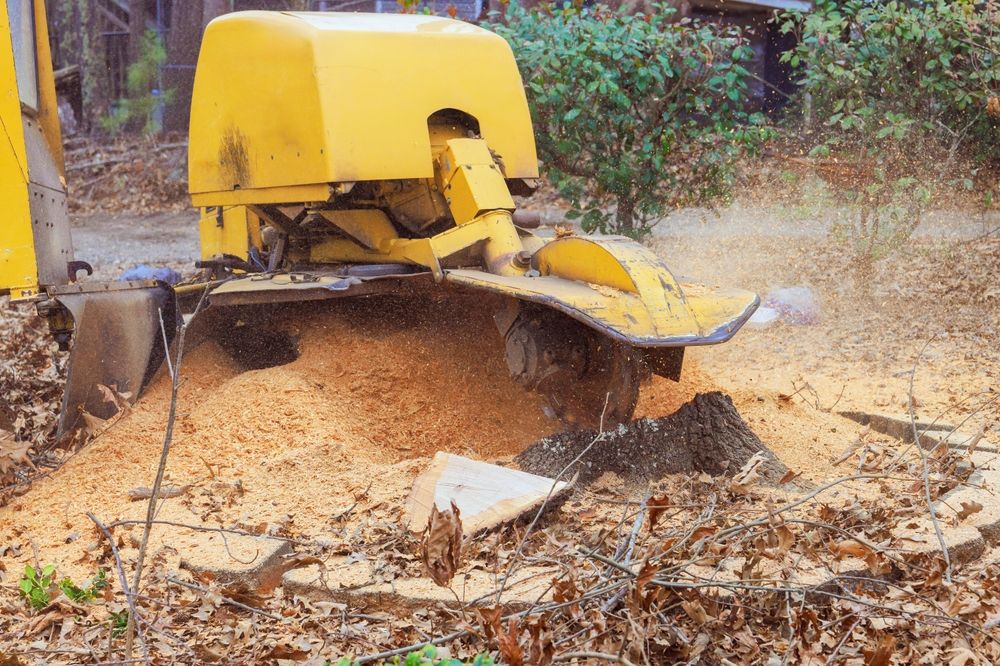
What Complete Stump Removal Accomplishes
The removal process uses equipment sized to match stump diameter and property access, grinding below the surface to a depth that prevents visible settling and allows direct planting or building over the location. For stumps near structures or utilities, the equipment operates with controlled movement that avoids property damage while still removing enough material to eliminate future growth.
After removal, you see level ground where the stump once stood, with wood chips and soil mixed to a texture that supports new grass seed or integrates into existing lawn areas. The area no longer produces sprouts, blocks equipment, or creates mowing hazards. On sites prepared for construction or hardscaping, the cleared location provides stable subgrade without voids that cause pavement cracking or foundation settling.
Full Time Grading & Excavating handles cleanup as part of the service, removing large wood chips if requested or spreading them as mulch depending on your landscaping plans. The equipment minimizes turf damage during access, and the work concludes with the site left cleaner than many property owners expect from a removal process.
Answers to Frequent Service Questions
Property owners in Taylorsville often ask about timing, site impact, and what to expect after stumps are removed.
What size stumps can be removed with your equipment?
The equipment handles stumps from small ornamental trees up to large hardwoods several feet in diameter, with the grinder depth adjusted based on whether you're planting grass, installing pavement, or building over the location.
How does stump removal affect the surrounding lawn or landscape?
The equipment accesses the stump with tracked movement that compresses turf temporarily but avoids the deep ruts caused by wheeled machinery, and removal typically disturbs a radius only slightly larger than the stump itself.
When is the best time to remove stumps after tree cutting?
Stumps can be removed immediately after cutting or years later, though fresher stumps grind more easily and waiting allows root decay that can create lawn settling issues if you've already seeded or landscaped around the area.
What happens to the wood chips and debris after grinding?
Wood chips are either hauled away, spread as mulch in planting beds, or mixed into the soil depression and topped with fill dirt depending on your site plans and preferences discussed before starting.
Why do some stumps sprout new growth even after the tree is cut?
Stumps from species like sweetgum, poplar, and willow send up shoots from living root tissue, and these sprouts persist indefinitely unless the stump and root crown are fully removed rather than just cut flush with the ground.
Full Time Grading & Excavating removes stumps across Alexander, Catawba, and Caldwell counties, handling single
residential stumps or multiple removals on commercial properties preparing for development. Request an estimate to address specific stump locations and discuss site access and cleanup preferences.